Recently Scotland rocked the political world, especially in Europe, by holding a formal vote to leave the United Kingdom.
The United Kingdom also known as Great Britain is composed of four major political subdivisions. These are England, Scotland, Wales, and Northern Ireland.
Over the past decades Scotland, Wales, and Northern Ireland each have gained what are called devolved governments from the main national government in London, England.
Powers though not completely equal in each area devolved to the areas except England include, transportation, taxation, local services: sanitation, police, public works, and education.
In truly federalized nations such as the United States, Canada, Australia, Brazil, Germany, Switzerland, and the United Arab Emirates have federalized systems.
The areas of these respective nations make up a national government. Each area is a main political subdivision that is equal more or less to the federal government in each nation. The federal government is reserved powers to govern the nation state composed of states, provinces, cantons, or emirates . The rest of the powers not given to the national federal government are the areas of the major political divisions of that nation.
Generally federal governments are assigned national law making, raising armies, navies, air forces, printing and/or coining the national currency, interstate or interprovincial commerce, and federal prison systems.
States as we will call them, though known by different names around the world in their respective lands are assigned overseeing the day to day local functions. The either directly supervise or devolve to cities and towns within them police powers, sanitation, fire protection and prevention, local judicial matters that involve petty and lesser crimes, education, incarceration at the sub national level for crimes against the various states, environment, etc.
Some powers both the federal and state entities share concurrently. These are incarceration for crimes, police powers, taxation, maintaining militias (part of a greater national force such as an army or navy when called upon) but otherwise subject to the heads of government to carry out defense and other emergency powers when the emergency is localized, regulation of commerce on the intrastate and interstate levels, judicial systems, and overseeing the political activity in each jurisdiction at the federal or state level.
Great Britain has been a unitary state for many hundreds of years with the King or Queen as Sovereign, the national legislature and government or parliament with the House of Commons having the most power and the House of Lords the upper house having diminished greatly over the years in its role as national government. In a unitary state the national government delegates or devolves powers it sees fit to the local levels of governance and reserves greater powers for itself both national and local powers not devolved.
At anytime a superior government can reserve back to itself the devolved powers with a stroke of a legal pen with or without justification.
In the federal systems the Constitutions limit the soverign where one reigns such as Canada and Australia. In the United States the federal government cannot dissolve state governments under any conditions. The US Constitution gives both the national and state governments reserved, concurrent, and/or implied powers that cannot be taken away except as the national constitution directs. The states can also check the federal government through their national congressional delegations or parliamentary deligations, laws or appeals to the federal government. In some cases states have refused to enforce federal laws as there is no constitutional mechanism to compel states and their political subdivisions to act on federal legislation.
An example of this in the United States is with drug laws, particularly marijuana. Federally the cannabis plant is illegal to grow, manufacture into product and sell in all 50 states. However, California, Colorado, Alaska, and Washington State all defy this law by only enforcing their own laws and leaving the federal law enforcement to do its work solo unless there is a compelling interest to join forces. Usually both jurisdictions work together where required and even not required. Similarly the federal government of the United States has arbitrarily chosen to enforce immigration law, which is national and not subnational leaving states to try to enforce federal law and the federal government deciding if it will or will not cooperate with the states.
In a unitary state all of this is decided at the national level, avoiding a check and balance system that exist to a greater or lesser style in federalized units.
Now the UK has develoved or delegated out the more localized powers to the governments nearest the people, it will be hard to take this back into London even though in English law the Westminster Government is completedly able to do so without reservation or accountability to the regional and local governments.
The UK is on a collision course with permenant federalism de facto or formally given up by London to the other regional units. This would leave the UK government almost soley with national issues and the regions of the UK with the day to day affairs of delegating out their respective local responsibilities. Even laws passed would be independent of London, except as agreed federally.
What should happen is during the current time devlolution in the UK should be maintained and the last devolvement of local government going to England. Scotland, Wales, and Northern Ireland all have Capital cities, Edinburgh, Cardiff, and Belfast respectively.
England should move the regional government out of London to decentralize the national government to a Capital the English people would designate. Candidates for the English Capital would be Manchester, Liverpool, Birmingham, Dover or another designated city. Once devolution is complete and all governments are functional at the regional level London would call a national constitutional convention. Representatives would come from England, Scotland, Wales, and Northern Ireland and hammer out a written constitution making each regional government sovereign from the national and each regional government would have the same responsibilities within its sphere and London could not take back, except in national emergency, any localized function or regionalized function.
London would take care of the national business and the four regions would send representatives to comprise the national government and run the country from London. London would work with Cardiff, Belfast, Ediburgh and the English capital to resolve problems. The queen would be represented by a governal general as in other former English colonies now independent of the British Crown at the regional levels as a delegate to exercise her powers as defined by federal agreement.
This would strenghthen the United Kingdom and ensure that they remained a major player on the global stage. The United States was the first to reject the unitary state and devolution government back in 1775 which resulted in the American Revolution. Other now independent nation states that have maintained a tie with the British Crown almost always "interact" with the queen via the governor general, who is like the Monarch left to ceremonial purposes except as defined by law.
The British though proud of tradition need to realize that all of their former colonies now independent especially the US, Canada, and Australia, have become more powerful due to each one's federal model. Canada's is actually more European in style while Australia is a hybrid of the US and European systems.
The Act of Union in 1707 unified the British people under one government. Now it is time for the National government to act as a purely national government by the people and for the people of the British Isles.
This will save the UK in my opinion. All that would need to happen are the Welch to get mad and hold a plebocite on separation from the UK. Scotland would almost equally follow. Northern Ireland would leave and only England would remain, unless it to desoloved a British government and the once great empire will have completely fallen without hope of a second wind resurrection.
Monday, October 6, 2014

Friday, October 3, 2014
The Snake River Plain...Desert?
Today I decided to take my lunch break away from both home and work. Those of you who check in probably have figured I am pretty open about some things. I left myself scratching my head is this too much or about right to disclose.
Well there are places that God leaves for us to get away from the mundane, boring, hectic and insane world we live in.
I have lived in desert land all my life. The American Southwest is most famous for the dust devils, sage brush, yucca, cacti and other flora and fauna of all kinds. Did you ever stop and see the greater desert of North America?
It extends beyond the traditional five. The Great Basin, The Mojave, The Colorado Plateau, The Sonora, and The Chihuahua.
One of the most interesting deserts of the Northwest North American Continent is the Snake River Plain Idaho.
This large lava field covered in thin topsoil, sagebrush, grassland, pinion juniper at higher elevations is an anomaly that isn't often looked at as a desert.
Located in southern Idaho and stretching from Hell's Canyon on the west to the Yellowstone plateau on the east is largely thought of as farm land or barren. But it has all the major characteristics of a continental desert.
It is in a large rain shadow of the Cascades and northern Sierra Nevada to the west. There are smaller ranges within the Snake River Plain but they more rim the plain than cross it. The Rocky Mountains lie to the north, northeast and east.
Millions to just 2,000 years ago this area was highly active with lava flows and earthquakes. The Yellowstone Caldera is closely associated with the Snake River Plain formation.
The "Nile" of the Pacific Northwest the Snake River flows from the highlands of Wyoming, across southern Idaho to form the western Idaho and eastern Oregon state line.
If there were no Snake River, there would be far less agriculture in the area because of the thin top soil and basaltic lava bed on which much of south Idaho rests.
The area is extremely dry with precipitation similar to the Great Basin. Ringed by mountains on all sides gives the area a dry atmosphere. The Snake River provides the silt for topsoil and the water necessary to grow crops in the Snake River Plain.
The Snake River provides not only agricultural water, and culinary water. A series of dams provide flood control, hydroelectric power, and recreational use making the area much more habitable than it otherwise would be.
Hells Canyon at the end of the Snake River Plain is the deepest gorge in the United States, deeper than the Grand Canyon and the central feature of Hells Canyon National Recreation Area.
In this desert area the porous lava beds absorb water into aquifers and eventually the water finds it's way to places like Snake River Canyon where there is no more room and the water seeps out in many waterfalls along the canyon walls.
Above is the superstructure of the Perrine Bridge. It is a steel arch structure bridge built in 1976 to replace an older model torn down. The traffic deck is on the top of the structure. Heavily used the arch structure distributes the weight of the bridge, and traffic into the canyon walls from the center of the structure out from the middle of the arch, creating a similar effect of both ancient and modern arch bridges.
BASE jumpers usually take the east side of the bridge and plunge off the bridge. From there due to the limits of height they have 3 seconds from flight to deployment of the parachute. There is little room for error. Botched jumps have resulted in fatalities that are a known and accepted risk among the jumping community. The Perrine Bridge is the only structure in the United States with unlimited jumping 365 days per year with no permit. Many jumpers miss the landing zones established and have to quickly ditch in the river. But the river has saved many jumpers from near certain death or short of that life changing injuries. Sadly the other type of jumper of the suicide nature often take this bridge as a way out with no purpose to make a return trip. BASE jumpers take suicidal jumpers and help in spotting the suicide jumpers and getting them help.
On the border of the Snake River Plain, basaltic hills or low mountains rim the Snake River Plain. This transition zone on the north and east leads to the Rocky Mountains and to the Great Basin Ranges in on the south. The City of Rocks National Preserve is near the Utah State line and famous among rock climbers.
On the north of the Snake River Plain is Craters of the Moon National Monument. This area has recent geologic history of lava flows just 2,000 years old. Some scientists who study the area say it is just a matter of time until the lava comes to the surface again. Only Hawaii has younger lava flows in the United States and Craters of the Moon has the next oldest in the 48 Contiguous States.
As mentioned above sagebrush, rabbit brush, grasses and other scrub take hold on the barren rock leaving much of the lava fields exposed. Even older fields across the plain punch through the surface due to shallow top soils and some believe the Lake Bonneville Flood of about 10,000 to 15,000 years ago.
When Lake Bonneville burst through a natural dam site on the present day Utah-Idaho state line the flood scoured in days what we see today as the Snake River Canyon and Hells Canyon, eventually finding its way up the Snake River flow way into the Columbia River and out to see. Some speculate that is why the older lava canyon such as the Snake River Canyon with much older and stronger rock looks like it was "blasted" just yesterday.
Head to any barren area or outlying area of the Plain and you will find the prickly pear cacti and some small barrel cacti as well. Cacti are native to every US state except Hawaii. Most are concentrated in the West and Southwest of the United States and southern Canada. Cacti do not need much soil to get a foothold and some need just a good rock base.
So the desert is all around south Idaho, far eastern Oregon and southern Washington State. One could draw a line at the western slopes of the Rocky Mountains and all around the Snake River Plain forming a ring along the Great Basin and Palouse in northern Idaho and Eastern Washington and get a rough estimate of the size of the Snake River Plain which with little but even rainfall, hot summers, cool dry winters, a true desert with a most unusual distinction. It is not basin and range like most desert areas. It is a volcanic desert with hundreds of old volcanic spatter and cinder cones and lava breaches in the Earth's crust.
Next time you get a potato from Idaho you can thank the Snake River and the unique desert that surrounds it, the Snake River Plain
Well there are places that God leaves for us to get away from the mundane, boring, hectic and insane world we live in.
I have lived in desert land all my life. The American Southwest is most famous for the dust devils, sage brush, yucca, cacti and other flora and fauna of all kinds. Did you ever stop and see the greater desert of North America?
It extends beyond the traditional five. The Great Basin, The Mojave, The Colorado Plateau, The Sonora, and The Chihuahua.
 |
| Shoshone Falls Park, Idaho |
This large lava field covered in thin topsoil, sagebrush, grassland, pinion juniper at higher elevations is an anomaly that isn't often looked at as a desert.
Located in southern Idaho and stretching from Hell's Canyon on the west to the Yellowstone plateau on the east is largely thought of as farm land or barren. But it has all the major characteristics of a continental desert.
It is in a large rain shadow of the Cascades and northern Sierra Nevada to the west. There are smaller ranges within the Snake River Plain but they more rim the plain than cross it. The Rocky Mountains lie to the north, northeast and east.
 |
| Near Shoshone Falls Park, Idaho on the Snake River. |
The "Nile" of the Pacific Northwest the Snake River flows from the highlands of Wyoming, across southern Idaho to form the western Idaho and eastern Oregon state line.
If there were no Snake River, there would be far less agriculture in the area because of the thin top soil and basaltic lava bed on which much of south Idaho rests.
 |
| Snake River, Idaho |
The Snake River provides not only agricultural water, and culinary water. A series of dams provide flood control, hydroelectric power, and recreational use making the area much more habitable than it otherwise would be.
Hells Canyon at the end of the Snake River Plain is the deepest gorge in the United States, deeper than the Grand Canyon and the central feature of Hells Canyon National Recreation Area.
In this desert area the porous lava beds absorb water into aquifers and eventually the water finds it's way to places like Snake River Canyon where there is no more room and the water seeps out in many waterfalls along the canyon walls.
 |
| Snake River Canyon, Idaho |
 |
| Underside of Perrine Bridge, Twin Falls, Idaho |
The Snake River Canyon on the left was the site of one of the famous jumps by late legend Eval Keneval. The jump was attempted, but was botched and Keneval never attempted the jump again. The ramp is still visible today built up for the .5 to 1 mile jump the daredevil was trying to attempt. But there are other adrenaline junkies as well. The Snake River Canyon has two famous bridges. The more famous, the Perrine Bridge has thousands of BASE jumpers that come to take the 500 foot jump and hope their parachute deploys.
 |
| Snake River Canyon, Idaho |
BASE jumpers usually take the east side of the bridge and plunge off the bridge. From there due to the limits of height they have 3 seconds from flight to deployment of the parachute. There is little room for error. Botched jumps have resulted in fatalities that are a known and accepted risk among the jumping community. The Perrine Bridge is the only structure in the United States with unlimited jumping 365 days per year with no permit. Many jumpers miss the landing zones established and have to quickly ditch in the river. But the river has saved many jumpers from near certain death or short of that life changing injuries. Sadly the other type of jumper of the suicide nature often take this bridge as a way out with no purpose to make a return trip. BASE jumpers take suicidal jumpers and help in spotting the suicide jumpers and getting them help.
On the border of the Snake River Plain, basaltic hills or low mountains rim the Snake River Plain. This transition zone on the north and east leads to the Rocky Mountains and to the Great Basin Ranges in on the south. The City of Rocks National Preserve is near the Utah State line and famous among rock climbers.
 |
| Craters of the Moon National Monument, Idaho |
As mentioned above sagebrush, rabbit brush, grasses and other scrub take hold on the barren rock leaving much of the lava fields exposed. Even older fields across the plain punch through the surface due to shallow top soils and some believe the Lake Bonneville Flood of about 10,000 to 15,000 years ago.
When Lake Bonneville burst through a natural dam site on the present day Utah-Idaho state line the flood scoured in days what we see today as the Snake River Canyon and Hells Canyon, eventually finding its way up the Snake River flow way into the Columbia River and out to see. Some speculate that is why the older lava canyon such as the Snake River Canyon with much older and stronger rock looks like it was "blasted" just yesterday.
Head to any barren area or outlying area of the Plain and you will find the prickly pear cacti and some small barrel cacti as well. Cacti are native to every US state except Hawaii. Most are concentrated in the West and Southwest of the United States and southern Canada. Cacti do not need much soil to get a foothold and some need just a good rock base.
So the desert is all around south Idaho, far eastern Oregon and southern Washington State. One could draw a line at the western slopes of the Rocky Mountains and all around the Snake River Plain forming a ring along the Great Basin and Palouse in northern Idaho and Eastern Washington and get a rough estimate of the size of the Snake River Plain which with little but even rainfall, hot summers, cool dry winters, a true desert with a most unusual distinction. It is not basin and range like most desert areas. It is a volcanic desert with hundreds of old volcanic spatter and cinder cones and lava breaches in the Earth's crust.
Next time you get a potato from Idaho you can thank the Snake River and the unique desert that surrounds it, the Snake River Plain
Wednesday, October 1, 2014
What just happened? My Boss Jumped the Shark?
Tonight I don't feel so wise. I came home feeling down and somewhat insulted. These are feelings that I do have some control over.
Earlier today about 4:30 PM my boss poked her head in my office door. With some that is a good experience. With this current boss, not so much.
She gave me that clarion call to her office kind of like an Elk bugle and a zombie stampede. In there was our on site HR guy. Of the two of them I would much rather see him.
The conversation covered much mundane stuff which really I don't feel is important to the story, other to say it was demeaning. The topic of course was "you suck" and the criticisms kept coming and coming and coming. I defended what little alibi I had. There is not really an alibi against accusations that most people will never hear of in their lives.
Password entries was one goal to be measured. Another one was asking for help when I didn't know the answer.
No antecedents were offered to the accusations. Just criticisms. At the end I asked "there must have been something I have done right." The HR guy said "Your getting here on time has improved."
Yeah, oh boy! I went back to my office and shut the door.
I sat and pondered the silly to somewhat justifiable goal list to avoid getting fired.
Then I began to write an email. First to my colleagues asking them for their honest input of my work. All bcc because of confidentiality stuff.
Then I finally wrote to my boss and cc the HR guy. I offered up my own rebuttal. It was professional, but to the point on several issues. The two of us will most likely collide over the content. But I am glad I wrote it.
Sometimes writing your boss in an email after silly talks to serious ones is very important. Communication is key to job survival. As I pointed out to a friend I vented to if you don't let your feelings be known and establish proper boundaries, you are bound to get hurt.
Bosses have to be kept in check as much as coworkers. When they cross the mark, they have to be respectfully and forwardly put back on their side of the line. Failure to communicate will lead to at the very least more problems and at the most going postal. Most of us will fall way between these extremes.
I spend 2 hours carefully selecting the written words. Taking out as much emotion as I could to keep the tone business like. But nonetheless keeping it to myself was going to eat at me.
So I employed one of Dr. Abraham Low's methods. I expressed myself in a "cultured" manner.
Now I wait and see the results. Yes it is always a risk telling your authority figure to back down and offer criticism that is deserved back to them. But so is doing something stupid by stuffing it in.
Tomorrow the results of the email will be read. What happens next I hope does not happen.
Now a few tips I have learned from this exercise in what seems futility.
First, Establish firmly what boundaries are expected and why they were crossed. Second, make sure that counter criticism is not demeaning or insulting. Make sure it does not whitewash the truth either. State the facts as you see them. No more and no less.
Third if human resources is ever involved then cc them so that it does not turn into boss vs employee. Chances are you'll lose if you're not the boss.
Fourth make sure you document the areas the boss has let you know are subpar and reasonable. If your boss can follow the "paper trail" then show him/her that you can create one in your own defense.
Fifth is that nobody should be bullied. Bosses like other bullies feed off of your fear and uncertainty of how to deal with them. Bosses that engage in power bossing, being overcritical of your work, vague about antecedents that precipitate their actions on you, or they must be "right" even if they are dead wrong.
Sixth for each incident of interaction with your boss, leave a note somewhere of the date, time, and nature of the discussion.
Seventh is if your boss sees weakness, they will most likely try to turn it against you. But if you are strong, they will modify their approach and/or back down.
Eighth is that employment is a two way street. Your boss needs to be reminded that you can go elsewhere and not return. That power they wield is not too good outside their sphere of influence. Don't be flippant or exaggerate. Just let them know that you have begun to consider all your options concerning the employment relationship.
A person really needs to be wise when picking and choosing battles. The workplace is no exception. This is especially true of management. Your boss can set you up with broad and very loose goals that you might not be able to obtain. If you take on your boss keep respect and objective wording to them. Emotions unchecked can be hard to recover from bad karma in a job situation.
Ninth, Don't stay where abusive relationships exist. Bide your time and bolt. Never be direct about quitting unless you are that sure that you can incur possible maladaptive behaviors. Keep your cards close to you and continue working in your present employment up to the last day.
Tenth is that you remember forgiveness is for healing you or the "inner vessel" before cleaning the "outward vessel" may save you eating crow. It sucks to tell someone you forgave them only if in the part.
Everybody will face the school yard, peer member, bad comment by an uncle you see twice on Facebook in six months. Will you give or takeaway their power? That is the final answer for now.
Earlier today about 4:30 PM my boss poked her head in my office door. With some that is a good experience. With this current boss, not so much.
She gave me that clarion call to her office kind of like an Elk bugle and a zombie stampede. In there was our on site HR guy. Of the two of them I would much rather see him.
The conversation covered much mundane stuff which really I don't feel is important to the story, other to say it was demeaning. The topic of course was "you suck" and the criticisms kept coming and coming and coming. I defended what little alibi I had. There is not really an alibi against accusations that most people will never hear of in their lives.
Password entries was one goal to be measured. Another one was asking for help when I didn't know the answer.
No antecedents were offered to the accusations. Just criticisms. At the end I asked "there must have been something I have done right." The HR guy said "Your getting here on time has improved."
Yeah, oh boy! I went back to my office and shut the door.
I sat and pondered the silly to somewhat justifiable goal list to avoid getting fired.
Then I began to write an email. First to my colleagues asking them for their honest input of my work. All bcc because of confidentiality stuff.
Then I finally wrote to my boss and cc the HR guy. I offered up my own rebuttal. It was professional, but to the point on several issues. The two of us will most likely collide over the content. But I am glad I wrote it.
Sometimes writing your boss in an email after silly talks to serious ones is very important. Communication is key to job survival. As I pointed out to a friend I vented to if you don't let your feelings be known and establish proper boundaries, you are bound to get hurt.
Bosses have to be kept in check as much as coworkers. When they cross the mark, they have to be respectfully and forwardly put back on their side of the line. Failure to communicate will lead to at the very least more problems and at the most going postal. Most of us will fall way between these extremes.
I spend 2 hours carefully selecting the written words. Taking out as much emotion as I could to keep the tone business like. But nonetheless keeping it to myself was going to eat at me.
So I employed one of Dr. Abraham Low's methods. I expressed myself in a "cultured" manner.
Now I wait and see the results. Yes it is always a risk telling your authority figure to back down and offer criticism that is deserved back to them. But so is doing something stupid by stuffing it in.
Tomorrow the results of the email will be read. What happens next I hope does not happen.
Now a few tips I have learned from this exercise in what seems futility.
First, Establish firmly what boundaries are expected and why they were crossed. Second, make sure that counter criticism is not demeaning or insulting. Make sure it does not whitewash the truth either. State the facts as you see them. No more and no less.
Third if human resources is ever involved then cc them so that it does not turn into boss vs employee. Chances are you'll lose if you're not the boss.
Fourth make sure you document the areas the boss has let you know are subpar and reasonable. If your boss can follow the "paper trail" then show him/her that you can create one in your own defense.
Fifth is that nobody should be bullied. Bosses like other bullies feed off of your fear and uncertainty of how to deal with them. Bosses that engage in power bossing, being overcritical of your work, vague about antecedents that precipitate their actions on you, or they must be "right" even if they are dead wrong.
Sixth for each incident of interaction with your boss, leave a note somewhere of the date, time, and nature of the discussion.
Seventh is if your boss sees weakness, they will most likely try to turn it against you. But if you are strong, they will modify their approach and/or back down.
Eighth is that employment is a two way street. Your boss needs to be reminded that you can go elsewhere and not return. That power they wield is not too good outside their sphere of influence. Don't be flippant or exaggerate. Just let them know that you have begun to consider all your options concerning the employment relationship.
A person really needs to be wise when picking and choosing battles. The workplace is no exception. This is especially true of management. Your boss can set you up with broad and very loose goals that you might not be able to obtain. If you take on your boss keep respect and objective wording to them. Emotions unchecked can be hard to recover from bad karma in a job situation.
Ninth, Don't stay where abusive relationships exist. Bide your time and bolt. Never be direct about quitting unless you are that sure that you can incur possible maladaptive behaviors. Keep your cards close to you and continue working in your present employment up to the last day.
Tenth is that you remember forgiveness is for healing you or the "inner vessel" before cleaning the "outward vessel" may save you eating crow. It sucks to tell someone you forgave them only if in the part.
Everybody will face the school yard, peer member, bad comment by an uncle you see twice on Facebook in six months. Will you give or takeaway their power? That is the final answer for now.
Tuesday, September 30, 2014
Six and The Fish

What started out as a couple of jabs back and forth ended up as a brawl. We were talking about "blocking" on Facebook, which is wiping them off your map. There may be some that don't know what it means.
As I traded insults with Six, the more dominant of the two women soon The Fish because she comes across like well a fish, joined in. Now The Fish in my humble opinion is lacking in some social skills.
I admit that I first insulted The Fish. But again I am not big on passive aggressive types. I digress.
The insults were hurled back and forth and getting more heated. Finally I realized I could use the block feature on Facebook against them. We'd been trading insults with it. So in no time at all Six was history on my account. The Fish was more illusive, but I nixed her too.
My coming back to that Facebook group is less exciting, but so is the exchange of insults. Starting sometimes is less important that finishing the fight. Well good riddance to both of those women and I hope the feeling is mutual.
No one deserves put down and sick crap directed at them. Someone asked who I even was. I explained that it didn't matter and in a nice way none of her business.
Sometimes we have to take the high road, even after realizing that we chose the low road first. Six and The Fish will still be there, but like a child covering his eyes, I won't see them.
Saturday, September 27, 2014
The Lessons of Dating on Facebook
I had a good Internet friendship going for six months. General interest was the main thing going on. Mutual interest beyond friendship happened and we texted back and forth for hours. Great fun.
Words mean everything and I will explain this shortly. As we talked we talked about very personal and not so personal stuff.
As we exchanged she called at 6:00 AM as there is two hour time difference between us both. That AM was my local time.
It was a good chat or so I can remember. Later things went south. A few words led to a mid afternoon of misunderstanding and finally the lady deciding to saying goodbye.
I was left scratching my head. What went wrong. Then my mind clicked on a possible scenario. I had dated a couple of other friends connected to the same Facebook site.
I had not assumed on obvious point. We all had shared mutual friends. I had dated two of them. Others may have had access to my account as a "friend" that I might have added without scrutiny of my knowledge base of them.
The damage is not going to kill anyone, but harm did come.
Here is what I learned on dating someone from Facebook:
1. First, introductions are everything. Say hello and chat a while. No matter how tempting it gets don't give out too much information early on. Don't friend them if you haven't already. Keep some privacy until you get to know their intentions.
2. Keep "Friends In Common" to a minimum. Your friendship or relationship is an open door to discussion about you by your Facebook interest and shared friends. Some of these shared friends can put on the good good face on the computer, and turn on you when talking to someone else.
3. Only when you have texted AND talked on the phone with your person of interest you should "friend" them. First we live in a TEXT HAPPY SOCIETY and texts are very convenient communications tools. But you should not just get to know someone via text.
Set your boundaries. First, be safe and chat on FB with your POI. Second get a phone number and move to step two. Text them first and get to know them, but only for a short time. Third, insist on talking to your POI before carrying out anymore texting. If "they are not ready" or "want to get to know you better" then that should be a red flag of stalling. I am not implying that they are not genuine, but if they will not put a voice to their face drop that baby by fading into the woodwork or by other more aggressive FB means if necessary.
4. If you and your former POI and or dating partner break it off, to avoid real damage consider blocking them. Do this quietly and without announcing it to everyone. Keep other means of communication open, not your FB account. Don't let your FB former person of interest or dating partner be able to keep up on you. Unfriending someone is okay, but not foolproof in protecting against cyberstalking your account to a degree. Block them first, don't just unfriend them.
5. If your friends in common still have a good relationship you may want to tell them that you and Mr. or Ms. X have ceased chatting, texting, dating, marriage, etc. By letting your closest friends and family know without airing dirty laundry can prevent them being manipulated by an ex.
6. If your person of interest blocks you out of whatever reason, this can be good. It allows you to work on your situation and they cannot see what you are doing on Facebook. If they unblock you then keep your attention on them. You won't know it until they contact you or you find out a third party way. Keep in mind you can block them, and they cannot undo that. Do what you need to do to protect yourself.
7. Unfriending in the FB community is considered by some to be a one finger salute. A block is a death penalty to your relationship. Think things through before you are put in a decision where you have to do so urgently. If you do use the unfriend or the block tools, remember that situation may just need time. People that have blocked me or unfriended me are now my friends again on Facebook. The dispute is settled.
You cannot go back to the way things were, but you can change yourself now.
8. If you are separating or divorced, block your spouse. It keeps you out of each other's lives and the temptation to cyberstalk the former husband or wife on social media. If you reconcile to the point where you can be friends on Facebook then great. But ex husbands and wives need boundaries also. Sometimes blocking someone out is not out of vindictiveness. It is out of caring enough about them and you to move on.
Words mean everything and I will explain this shortly. As we talked we talked about very personal and not so personal stuff.
As we exchanged she called at 6:00 AM as there is two hour time difference between us both. That AM was my local time.
It was a good chat or so I can remember. Later things went south. A few words led to a mid afternoon of misunderstanding and finally the lady deciding to saying goodbye.
I was left scratching my head. What went wrong. Then my mind clicked on a possible scenario. I had dated a couple of other friends connected to the same Facebook site.
I had not assumed on obvious point. We all had shared mutual friends. I had dated two of them. Others may have had access to my account as a "friend" that I might have added without scrutiny of my knowledge base of them.
The damage is not going to kill anyone, but harm did come.
Here is what I learned on dating someone from Facebook:
1. First, introductions are everything. Say hello and chat a while. No matter how tempting it gets don't give out too much information early on. Don't friend them if you haven't already. Keep some privacy until you get to know their intentions.
2. Keep "Friends In Common" to a minimum. Your friendship or relationship is an open door to discussion about you by your Facebook interest and shared friends. Some of these shared friends can put on the good good face on the computer, and turn on you when talking to someone else.
3. Only when you have texted AND talked on the phone with your person of interest you should "friend" them. First we live in a TEXT HAPPY SOCIETY and texts are very convenient communications tools. But you should not just get to know someone via text.
Set your boundaries. First, be safe and chat on FB with your POI. Second get a phone number and move to step two. Text them first and get to know them, but only for a short time. Third, insist on talking to your POI before carrying out anymore texting. If "they are not ready" or "want to get to know you better" then that should be a red flag of stalling. I am not implying that they are not genuine, but if they will not put a voice to their face drop that baby by fading into the woodwork or by other more aggressive FB means if necessary.
4. If you and your former POI and or dating partner break it off, to avoid real damage consider blocking them. Do this quietly and without announcing it to everyone. Keep other means of communication open, not your FB account. Don't let your FB former person of interest or dating partner be able to keep up on you. Unfriending someone is okay, but not foolproof in protecting against cyberstalking your account to a degree. Block them first, don't just unfriend them.
5. If your friends in common still have a good relationship you may want to tell them that you and Mr. or Ms. X have ceased chatting, texting, dating, marriage, etc. By letting your closest friends and family know without airing dirty laundry can prevent them being manipulated by an ex.
6. If your person of interest blocks you out of whatever reason, this can be good. It allows you to work on your situation and they cannot see what you are doing on Facebook. If they unblock you then keep your attention on them. You won't know it until they contact you or you find out a third party way. Keep in mind you can block them, and they cannot undo that. Do what you need to do to protect yourself.
7. Unfriending in the FB community is considered by some to be a one finger salute. A block is a death penalty to your relationship. Think things through before you are put in a decision where you have to do so urgently. If you do use the unfriend or the block tools, remember that situation may just need time. People that have blocked me or unfriended me are now my friends again on Facebook. The dispute is settled.
You cannot go back to the way things were, but you can change yourself now.
8. If you are separating or divorced, block your spouse. It keeps you out of each other's lives and the temptation to cyberstalk the former husband or wife on social media. If you reconcile to the point where you can be friends on Facebook then great. But ex husbands and wives need boundaries also. Sometimes blocking someone out is not out of vindictiveness. It is out of caring enough about them and you to move on.
Friday, April 4, 2014
The Morals and Values of Company X

Company X had a slogan that reflected doing the moral and ethical thing.
Like all good corporations Company X believed in profits, growth, client and customer satisfaction, and providing jobs to very qualified individuals.
Company X had a Board of Directors, A CEO, Vice Presidents, upper, middle, lower management, and the common line employees in their various functions.
The company bus was rolling along the American Economic Highway. It had been smooth sailing from the start, very few bumps in the road, relatively smooth terrain, and very few problems to worry about.
Then one of the drivers decided he didn't like the way his bus in the convoy was running. So he opened the floorboard and threw an employee under the bus. Kathump went the wheels of the bus over the unnamed person. It was nobody significant, and the driver of the bus said that it was necessary to throw one employee under the bus for the good of the whole.
The driver then decided to rearrange the order of the passengers of the bus. He took employees from the back and put them in the middle, middle employees to the front, front to back and so forth. He created several new areas within the bus to to help the functions of the bus run smoother.
With so many new arrangements the driver again had the floor boards opened up and threw another three bodies under the bus. Nobody really notice or much cared. It wasn't them and they were thankful for that. The bus driver pulled into a large vehicle wash to get the blood and debris off the company bus. The bus had a brand and could not be seen driving around with the blood and guts of those thrown under. It wasn't good for morale anyway.
Once the bus was underway and one more person got thrown under, the bus driver looked among his bus staff and found several people he would make micro managers. To oversee the micro managers would be managers, an associate director then the driver at the top. There was always a need to be ready to throw someone under the bus so the bus driver made the human resources job to throw unwanted or unneeded people under the bus.
When someone would ask the driver to give them a raise he said "no" or made an excuse. He would make silly rules to save a dime. Some of his very first passengers had been loyal to him from day one, but the only way they could get a raise is to install glass ceilings in the bus and take on a lot of responsibility. So the loyal minions that were most likable were promoted to micro manager.
There was one micro manager who had great thoughts and ideas and they helped the Company X bottom line. So they borrowed his ideas and utilized them. He was a good micro manager, but hated doing too much micromanaging. The driver did not like this neo micromanaging style and so he called a meeting of the management minions. He told them he had gone to a bus line owner convention, come up with new ways of doing things. The micro manager he cared about least was thrown under the bus. But he was asked to hang on for dear life, because they may need to yell under the bus to get more ideas.
Now he was just another passenger, but now under the bus, and was asked to be loyal for the good of the Company X brand.
Not being stupid he let go, let the wheels roll over him and found himself alongside the road. Fearing they might loose intellectual property or the man's brain, nobody knows for sure, they U turned only to find the spot where he let go there was no corporate road kill. Just a skid mark and a note that said "I dodged the wheels and I am not telling you how I did it."
The driver tried in vain as more minions got passed the micro managers went out the windows, the emergency exit, or the front side door to jump to other buses and trucks on the American Economic Highway. Even the bus Attorney tried to sue some to no success for violation of a no compete clause, but all in vain.
Finally in time a call came in from corporate dispatch at Company X. The driver was hauled out of his seat, put under the floorboard, and crunched under the bus. Seems the ethics monster had caught up with Driver Robespierre. In the end he was expendable too.
The bus is still rolling and making money, but has lost much intellectual talent due to its policies of treating employees. Because only the employees could make the company money and Company X had thrown out all those expendable minions.
So is the ethics and values of Company X. No longer a major player, but a minor one, because they did not observe one simple principle. "Do unto others as you would have them do unto you."
Sunday, March 23, 2014
Gratitude
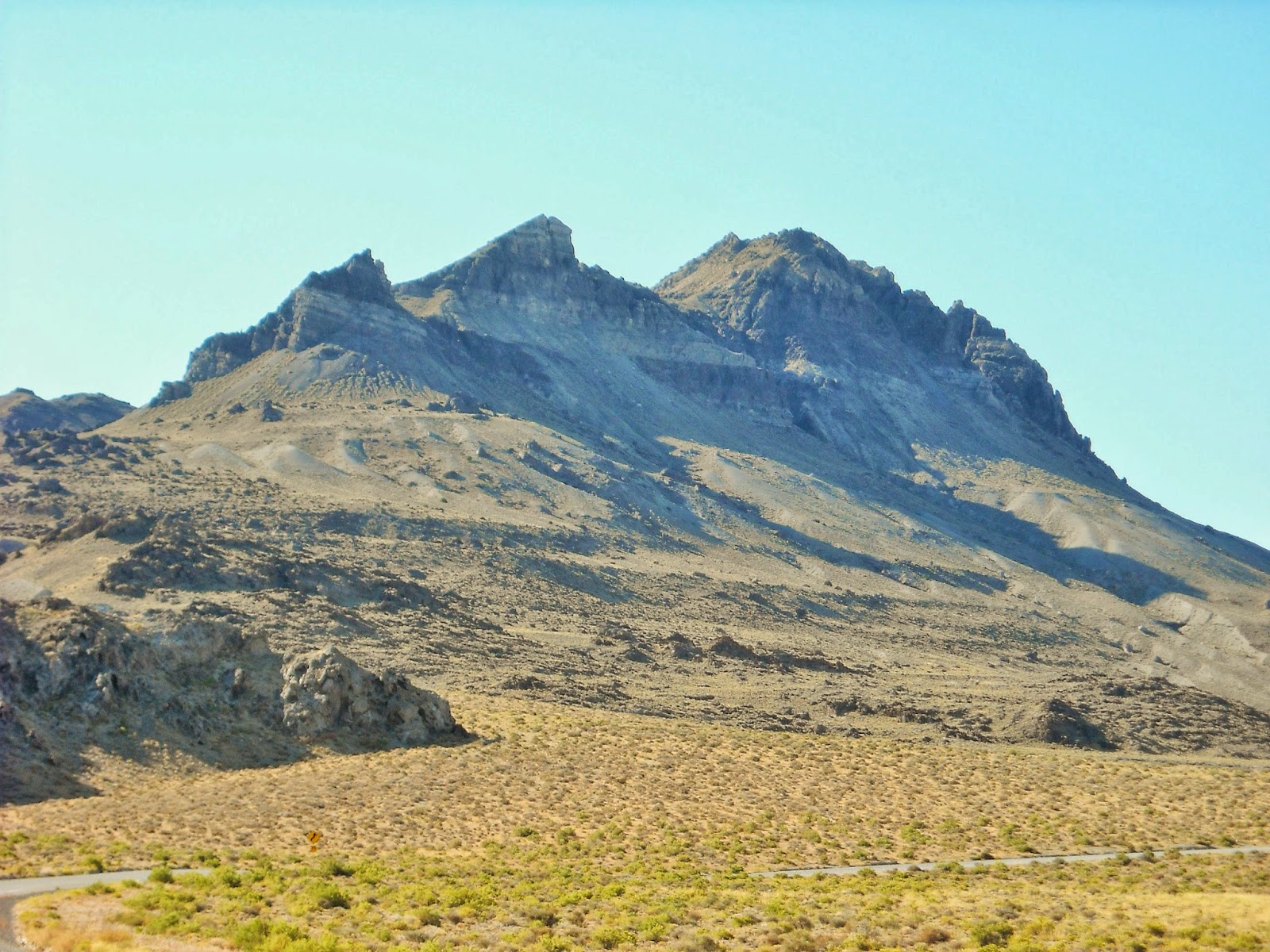 | ||||
| It is often in "our own desert" that we "meet" God. |
One of those things I have noticed is lack of gratitude. Gratitude for what? For starters just being alive. There is health, family, a place to call home, food and appreciation for good hard work. Who to be grateful to? There are our employers for providing us with a job from which we can get an income. There are our parents who gave us life and sacrificed much so we could be who we are and believed in us and what we can become.
There are those who lifted us up on a down day. There are those that bore our trials with us even though they had no reason to do so. There are friends who put loyalty before differences. There are those who don't turn away when it would be easy to do so.
There are the good times when very little adversarial trials are in our way. There are the things that we learn in easy and hard times. There is humility when it is easy to become prideful. There is the spiritual when darkness is all around us. There is being accepted for who we are and not what we aren't.
Above all there is a Supreme Being to whom all the glory of this gratitude goes. He is the architect of our lives, the giver of all things from the most simple to the very rich. He says yes to more prayers than He says no too.
Where have we gone as a society when the only thankfulness we can muster up is the obligatory type at a restaurant to the server? Being grateful is second only to being charitable in defining a person. If we were only just a small bit more grateful to our fellow man and our God just think of the miracles that would follow?
What are we truly missing out on here? We are missing out on the ability to be free or be in bondage. To appreciate rather than demand. To love rather than demand love. To be respected because of being the better person. There is much more than just these things, but I truly believe our level of self actualization is tied to how grateful we really are.
We all must make our own way, yet no one can get to the goal without some assistance seen or unseen. It is not the great things, but the little things that we must be thankful for before we can appreciate the big changes in life.
We watch the media and they say that we should all do it for ourselves and others should benefit us. We should do for ourselves the right thing so we can be of assistance to our fellow beings, not the other way around.
I get on social media sites and the stench of "look at me" is everywhere. How about we look at us and then honestly assess our situation. If we want different outcomes we have to change the way we make things happen. We can't beat the same dead horse expecting a live one to take it's place. We have to bury the dead horse and assess. What are we doing right? If we are doing the right thing keep it. What are we doing wrong? If we are doing wrong change it. What is we don't know where to go? Ask directions.
It is easy to say this stuff but much harder to do in practice. A wise man once said the world would take the poor out of the "slums" and put them in better conditions. He then said that God "takes the slums out of the people and then the people take themselves out of the slums."
Thankfulness is taking the slums out of the people, out of ourselves. Then if we are in literal or symbolic slums we remove ourselves to better housing, communities, attitudes, jobs, friends, etc. That gratitude is what I hope more members of society will see and practice. A simple "thanks" goes a long way when you mean it. Just imagine thank yous and humility combined? What a better world we make for ourselves.
If we want to be the center of attention, quit trying to make everyone see how much you have, your social status, your job, income, and physical attractiveness. People are more attracted to character than to substance. If you desire attention get it the right way, not the "look at me" way.
Gratitude is the key to happiness and more blessings in our lives. I hope our society can have gratitude vs entitlement. The entitled person is never happy because they always want something and never stop demanding. The grateful person opens up and is thankful for what they have and then have more room to receive, because they are more willing to give to others. It is the service that is tied universally to gratitude.
There is never something for nothing. Someone is writing a check. We should be grateful for what we have and we will get more in proportion to gratitude.
Subscribe to:
Posts (Atom)